

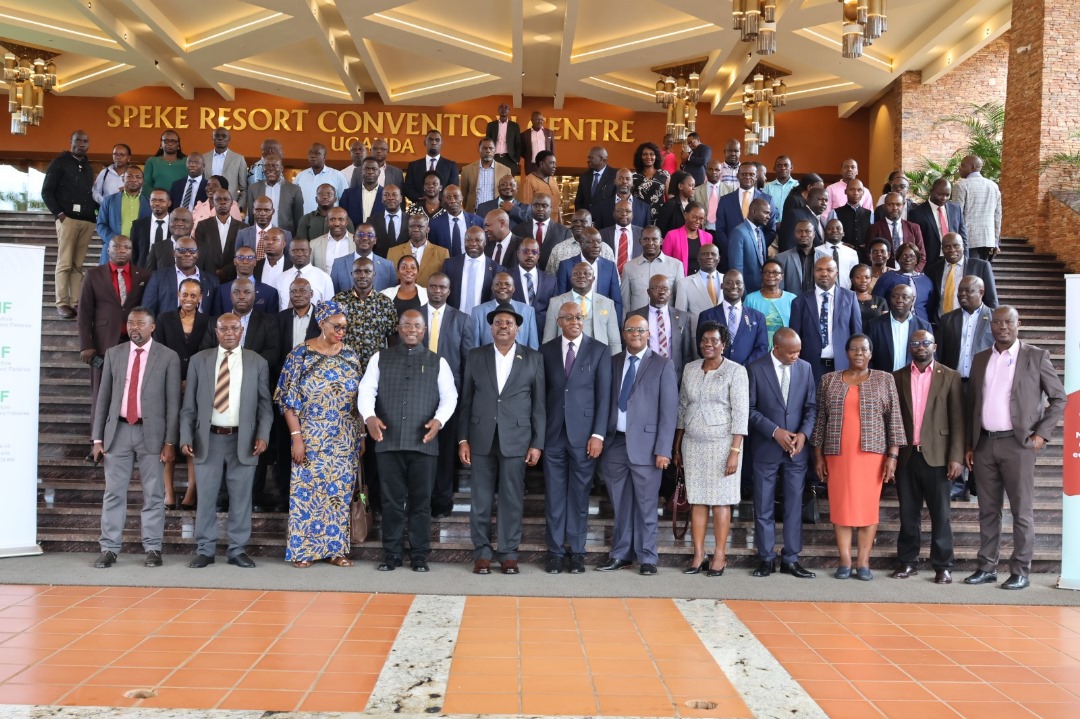
The Eastern and Southern Africa Small-Scale Farmers’ Forum (ESAFF) Uganda joined representatives from key government ministries and development partners for the 4th Joint Agro-Industrialization Programme Annual Review (JAPAR) at Speke Resort Munyonyo.
The high-level meeting assessed progress and charted next steps for Uganda’s agro-industrialization agenda.
Running under the theme “Enhanced Productivity, Value Addition, and Marketing of Agricultural Commodities for Socio-Economic Transformation,” the review focused on collaboration across sectors to drive growth, promote value addition, and expand market opportunities for farmers and agribusinesses.
Speaking at the event, Minister of State for Agriculture Fred Bwino Kyakulaga underscored the need for joint efforts to accelerate agricultural transformation.
“As we review our progress, it’s crucial that we focus on strategies that boost productivity, enhance value addition, and improve marketing of our agricultural commodities,” he said.
“This will not only increase our economic growth but also uplift the livelihoods of millions of Ugandans who depend on agriculture.”
Bwino highlighted agro-industrialization as central to Uganda’s National Development Plan (NDP III), noting that improved value chains are key to job creation, poverty reduction, and export diversification.
“We must work together — government, private sector, farmers, and development partners — to unlock the full potential of agriculture as an engine for socio-economic transformation,” he added.
ESAFF Uganda reaffirmed its commitment to supporting national efforts by promoting sustainable, resilient, and inclusive agricultural practices.
Stakeholders agreed that strengthening coordination, policy alignment, and investment in value addition initiatives is critical to building robust value chains from production to processing and marketing.
The meeting concluded with a renewed commitment to ensuring that sustainable agricultural growth remains central to Uganda’s ambition to achieve middle-income status.
